
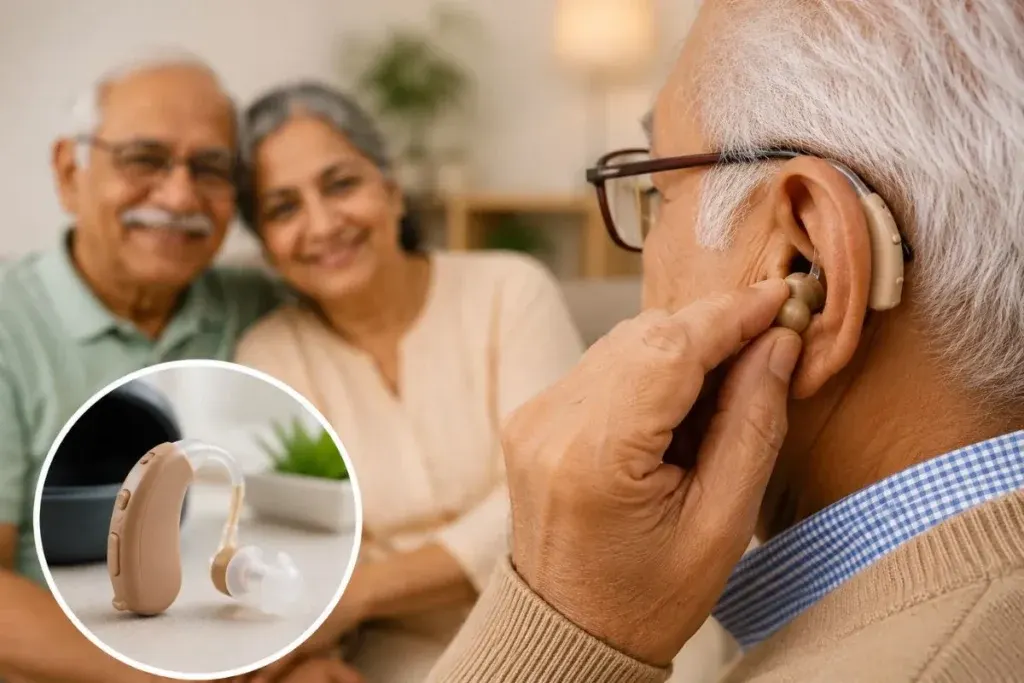
The Ultimate Guide to Finding the Best Hearing Aid for Old Age

Best Hearing Aid for Old Age
It usually starts with small, easily missed moments. With age, older adults find they lose hearing. Whether it is finding family members mumbling or turning up the television volume just a couple of notches higher than before. Every small moment like this points to age-related hearing loss, which can feel deeply isolating.  Fortunately, choosing a modern digital hearing device completely changes this dynamic. Today’s technology does not just blindly amplify sound; it acts like a smart wearable computer that sharpens human speech while instantly softening chaotic background noise. Whether you are searching for your own daily comfort or helping a beloved elderly family member find the perfect fit, this comprehensive guide will give you the clarity and confidence to make the right decision together.

Key Takeaways

  • Prioritize Daily Comfort: Choosing a style that fits securely inside the canal or comfortably behind the ear ensures long-term wearability.
  • Look for Essential Features: Automatic noise reduction and directional microphones are critical for understanding speech in crowded environments.
  • Select Convenient Power Options: Rechargeable styles remove the frustration of managing miniature disposable cell batteries.
  • Consult an Expert: A professional diagnosis provides precise performance settings and the correct physical fit tailored to your ear anatomy.
  • Maintain the electronics daily: Cleaning away earwax regularly and using an overnight dehumidifier box protects the internal components.

5 Clear Signs It Is Time to Explore a Hearing Device

Because hearing decline happens gradually over many years, it can be difficult for individuals to notice it themselves. Families and individuals should look out for these five common everyday situations:
  • The “What?” Loop: Constantly asking family members to repeat sentences, or mistaking similar-sounding words in quiet rooms.
  • Elevated Media Volumes: Setting the TV, tablet, or smartphone to a volume level that feels uncomfortably loud to visitors or spouses.
  • The Social Retreat: Choosing to stay quiet, anxious, or unusually detached in crowded spaces, family get-togethers, or restaurants.
  • Struggles on the Phone: Finding phone conversations exhausting because words blend together without face-to-face visual cues.
  • Consonant Dropouts: Missing high-pitched consonant sounds like s, f, t, or th, making human speech sound like an incomplete puzzle.

What Is the Best Hearing Aid for Old Age?

The best hearing aid for old age depends on the degree of hearing loss, comfort needs, and lifestyle. The ideal choice depends entirely on the wearer’s specific degree of hearing loss, physical hand coordination, and daily lifestyle. 
Hearing Aid Style Ideal For Visual Profile Ease of Daily Handling
BTE (Behind-the-Ear) Severe loss; seniors with limited finger dexterity Visible Very Easy (Larger parts are easy to hold and clean)
RIC (Receiver-in-Canal) Mild to severe loss; active seniors wanting natural sound Sleek & Discreet Easy (Small body with a thin, flexible wire)
CIC (Completely-in-Canal) Mild to moderate loss; maximum cosmetic privacy Nearly Invisible Moderate (Requires steady fingers to change/insert)
There is no one-size-fits-all model, but the leading designs address different combinations of physical handling needs and cosmetic preferences.

BTE (Behind-the-Ear) Hearing Aids

BTE hearing aids are often the preferred option for older adults with moderate to severe hearing loss. Because the main device sits behind the ear, the controls, batteries, and charging components are larger and easier to handle. This makes them an excellent choice for seniors with arthritis, reduced finger strength, or vision difficulties.

RIC (Receiver-in-Canal) Hearing Aids

RIC hearing aids are among the most popular options for active seniors. They offer natural sound quality, advanced noise reduction, Bluetooth connectivity, and a discreet appearance. They are suitable for mild to severe hearing loss and are often recommended for individuals who regularly participate in social activities.

CIC (Completely-in-Canal) Hearing Aids

CIC hearing aids fit deep inside the ear canal, making them nearly invisible. They are best suited for adults with mild to moderate hearing loss who prioritize cosmetic discretion. However, their smaller size can make them more challenging to insert, remove, and maintain.

Essential Features to Prioritize for Older Adults

When children and parents sit down together to select a device, it is easy to get distracted by high-tech gimmicks. To ensure long-term satisfaction and avoid a device being left unused in a drawer, focus on these highly practical features:

1. Rechargeable Lithium-Ion Power Cells

Peeling tiny tabs and inserting miniature disposable button batteries can be a major source of frustration for older adults with arthritis or unsteady fingers. Rechargeable hearing aids remove this hassle completely. The wearer simply drops the instruments into a magnetic charging cradle overnight, and they wake up to a full day of automated power.

2. Intelligent Speech Isolation

Older, basic amplifiers simply made every sound in the room louder, including the hum of the refrigerator or a passing vehicle. Look for devices equipped with Deep Neural Network (DNN) processing. This built-in computer chip analyzes the environment in real time, actively suppressing background noise while sharpening human voice frequencies.

3. Direct Bluetooth Streaming and Safety Alerts

Premium systems pair directly with Apple and Android smartphones. This lets seniors stream crisp phone calls, clear television audio, and favorite music directly into their ears like personalized wireless speakers. More importantly, advanced models now include built-in fall detection alerts. If a senior relative experiences a fall while home alone, the device automatically sends an urgent text message with GPS coordinates to designated family contacts.

Trusted Hearing Aid Brands for Older Adults

Investing in a medical-grade device from an established global manufacturer ensures your family receives reliable hardware, ongoing software updates, and exceptional acoustic depth. While no single brand is best for every senior, several global manufacturers consistently lead the market in sound quality, reliability, and hearing technology.

Signia

Signia is a leading innovator recognized for blending advanced signal processing with ultra-sleek, user-friendly designs that actively lower user listening fatigue.
  • Best For: Speech clarity in crowds.
  • Key Feature: Cutting-edge dual-processor technology that isolates voice frequencies from noise.

Phonak

Phonak is a powerhouse manufacturer celebrated for its rugged hardware durability, excellent power reserves, and highly flexible connectivity interfaces.
  • Best For: Universal streaming connectivity.
  • Key Feature: Hands-free pairing directly to both Android and iOS devices.

ReSound

ReSound is a pioneer in natural sound, spatial clarity, and absolute smartphone compatibility, engineered to help wearers map precisely where voices are coming from.
  • Best For: 360-degree environmental awareness and spatial tracking.
  • Key Feature: Next-generation Auracast Bluetooth audio sharing paired with directional microphone arrays that pinpoint sound direction.

Widex

Widex is a specialized brand highly favored by musicians and audio purists for its premium sound sampling rates and focus on organic acoustic profiles.
  • Best For: Pure audio fidelity.
  • Key Feature: Industry-fastest signal processing that prevents artificial, robotic audio delays.

How to Choose the Right Hearing Aid

Finding the perfect match requires looking at physical traits, daily routines, and personal comfort:
  • Assess the Level of Loss: Mild changes can be easily managed with a small, lightweight RIC model or a hidden canal-style device. Severe or profound changes generally require the robust power and amplification found in a traditional BTE model.
  • Evaluate Daily Activities: An individual who loves attending busy community events or dining out will benefit from automated noise reduction and directional microphones. A home-based senior who enjoys reading or watching television may prioritize simple operation and physical comfort.
  • Check Physical Management: It is important to ensure the user can easily place the device in their ear, clean the tiny components, and manage the charging system comfortably. If eyesight or hand coordination is limited, a larger BTE style or an automated rechargeable model is usually best.

The Step-by-Step Path to Better Hearing

Finding the perfect fit is a collaborative journey that combines diagnostic science with lifestyle adjustments. Skipping straight to over-the-counter sales without professional guidance often leads to poor physical fit and vocal distortion.

Step 1: Schedule a Professional Audiogram

Begin with a comprehensive diagnostic evaluation by a certified expert. This maps out the exact frequencies your loved one’s ears are missing, creating a precise blueprint for programming.

Step 2: Select the Physical Configuration

Evaluate hand dexterity and vision together. Determine if a larger, sturdy BTE style or a lightweight, discreet RIC device fits your relative’s physical routine best.

Step 3: Custom Ear Mold or Dome Fitting

A specialist ensures the acoustic tip sits comfortably inside the ear canal. A correct physical seal stops sound from leaking out, preventing high-pitched whistling feedback.

Step 4: Navigate the 30-Day Brain Adaptation Period

The human brain needs a few weeks to relearn how to process forgotten background noises. Start by wearing the new devices for 2–3 hours a day in quiet rooms, slowly expanding usage.

How Can Seniors Maintain Their Hearing Aids?

Proper care ensures these devices perform at their absolute peak and last for several years. Because these sensitive electronics are exposed to earwax and daily moisture, consistency is key:
  • Daily Cleaning Routine: Users should gently wipe the exterior surfaces with a soft, dry microfiber cloth or a specialized cleaning brush to clear away wax. Water, liquid cleaners, or household detergents must never be used, as fluid will short-circuit the internal electronics.
  • Safe Moisture Storage: Devices should be kept inside a protective case in a cool, dry room when they are not being worn. Using a dedicated drying kit or dehumidifier storage box overnight is highly recommended to draw out trapped moisture.
  • Smart Power Care: Cleaning the small charging contacts regularly with a dry cotton swab keeps the power connection stable. For those using disposable batteries, opening the battery door completely at night allows internal components to dry out.

What Are the Most Common Problems and Their Solutions?

  • Sounds Feel Too Loud or Tinny: The brain needs time to relearn how to process forgotten background noises. Seniors should start by wearing new devices for just two to three hours a day in quiet rooms, then slowly increase the time as the mind adapts.
  • Physical Soreness or Irritation: A properly fitted device should never cause pain. If raw spots or soreness develop, the silicone dome or custom mold might be the wrong size, and a specialist can make a quick adjustment.
  • High-Pitched Whistling or Feedback: Squealing happens when amplified sound escapes the ear canal and loops back into the microphone. Ensuring the device is seated snugly inside the ear can stop this; if the whistling continues, the ear should be checked for a buildup of wax.
  • No Sound Coming From the Device: The small wax guard filter located at the tip of the speaker should be checked first. A tiny clog of earwax is the single most common cause of a seemingly broken device, and replacing this filter usually restores full sound immediately.

How Much Do Hearing Aids Cost for Seniors? 

Category Typical Price Range
Basic ₹20,000–₹50,000
Mid-range ₹50,000–₹1,50,000
Premium ₹1,50,000+

Restoring Connection and Cognitive Health

Choosing the right hearing device is one of the most transformative decisions an older adult and their family can make. Medical research consistently shows that addressing hearing decline early does far more than improve communication. It actively preserves cognitive sharpness, minimizes daily mental fatigue, and keeps seniors feeling deeply connected to the people around them. Seeing a beloved parent or grandparent instantly light up when they hear a grandchild’s soft whisper or answer a phone call without stress is an incredibly rewarding experience for the entire family. If you are ready to explore your options, learn about local pricing, or experience how modern devices feel in person, our clinical team is here to support you. Scheduling a professional diagnostic audiometry test is the safest, most effective way to map out a clear path toward long-term listening comfort and family connection.

Ready to reconnect your loved ones to family conversations? Visit us for expert hearing care in Delhi today and discover our range of comfortable, high-tech digital devices. 

Author picture

The editorial team at Hearing Hope intends to share expert-certified information on hearing loss, hearing tests, and hearing care solutions. We aim to ease your journey and provide you with reliable information and aid.

Table of Contents

Get In Touch

Contact Our Specialists

Frequently Asked Questions

The best hearing aid depends on your hearing loss and daily needs:

  • BTE (Behind-the-Ear): Best for moderate to severe hearing loss and easy to handle.
  • RIC (Receiver-in-Canal): Ideal for mild to severe hearing loss, offering natural sound and advanced features.
  • CIC (Completely-in-Canal): Best for mild to moderate hearing loss and those who prefer a discreet, nearly invisible device.

A hearing specialist can recommend the most suitable option based on your hearing assessment and lifestyle.

A hearing aid is a medical device that is programmed to match an individual's specific hearing loss. It amplifies only the sounds and frequencies that are difficult to hear, helping improve speech clarity and listening comfort.

A sound amplifier, on the other hand, simply makes all sounds louder, including background noise. It is not customized to a person's hearing needs and may make conversations harder to understand in noisy environments.

For individuals with hearing loss, a professional hearing test and properly fitted hearing aid usually provide better results than a standard sound amplifier.

A traditional BTE style or a larger rechargeable RIC model is generally the easiest option for older individuals. Their slightly larger dimensions make them much easier to grasp, clean, and fit into position without dropping. Rechargeable variants clip magnetically into automated cradles, avoiding the need to balance miniature power cells.

Most premium digital hearing instruments deliver exceptional operational service for a window of 3 to 7 years. Longevity relies heavily on everyday habits, personal skin acidity levels, and consistent wax shield maintenance. Internal computer chips may also need modernization over time to keep pace with changing wireless phone technology.


No. A hearing test helps identify the type and severity of your hearing loss, ensuring you get the right hearing aid and settings for your needs. Using a hearing aid without a professional assessment may not provide the best results and could make hearing more difficult in certain situations. An audiologist can recommend the most suitable device based on your hearing profile.

A high-power BTE-style device is the universal recommendation for severe or profound neural damage profiles. The rear-mounted layout accommodates larger amplifier components alongside ultra-durable, long-life power cells. This safely moves the microphone away from the sound output canal to completely block high-volume feedback cycles.


An audiologist performs a hearing assessment, identifies the type and severity of hearing loss, and recommends the most suitable hearing aid. They also ensure the device is programmed correctly and provide follow-up support for the best hearing experience.

Seniors can visit a professional hearing care clinic for a comprehensive hearing evaluation. If you are looking for expert hearing care in Delhi, Hearing Hope provides diagnostic hearing tests, hearing aid fittings, and ongoing support tailored to individual hearing needs.