Struggling to hear conversations clearly or asking people to repeat themselves can be frustrating and may affect your confidence in everyday situations. While some hearing problems require medical treatment, healthy lifestyle habits can play an important role in protecting your hearing and supporting your overall hearing health.
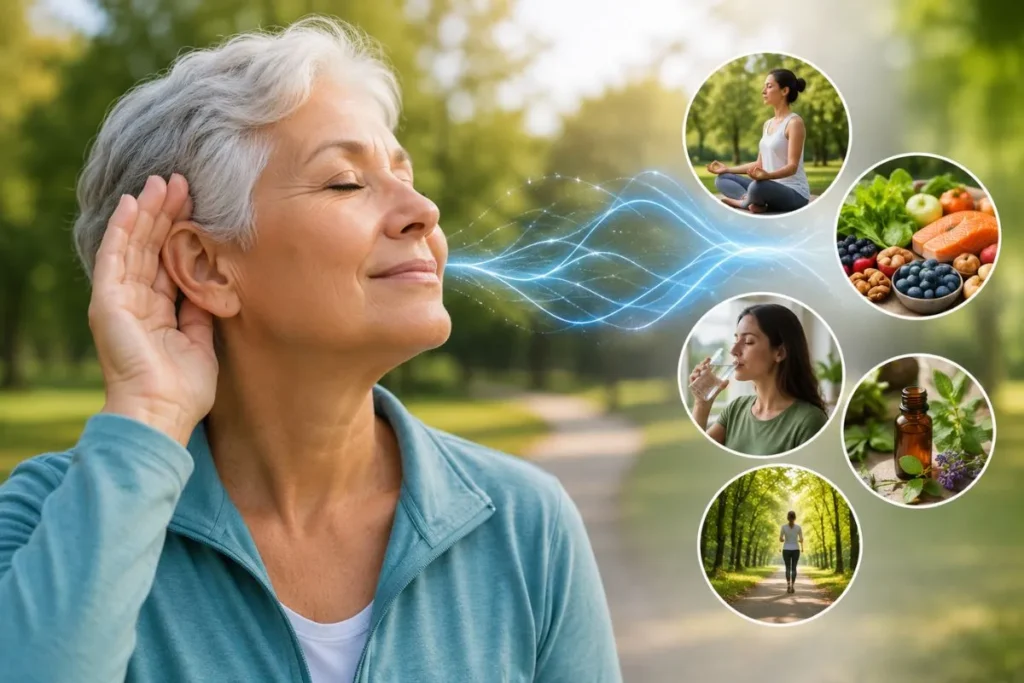
If you’re wondering how to improve hearing naturally, the answer starts with understanding what natural methods can and cannot do. A balanced diet, regular exercise, good listening habits, and protecting your ears from loud noise can help maintain healthy hearing and reduce the risk of further damage. However, these habits cannot reverse permanent hearing loss caused by damage to the inner ear or auditory nerve.
In this guide, you’ll learn practical, science-backed ways to support your hearing naturally, understand the common causes of hearing loss, and know when it’s time to seek professional hearing care clinic.
While healthy habits can support hearing health and help prevent further damage, they cannot restore permanent hearing loss caused by damage to the inner ear or auditory nerve. Eating a balanced diet, exercising regularly, protecting your ears from loud noise, and seeking professional hearing care when needed are the most effective ways to maintain healthy hearing.
Before exploring natural strategies, it is helpful to understand why hearing changes occur. Hearing challenges often develop due to a combination of lifestyle and biological factors:
What you place on your dinner plate directly influences how efficiently your body manages overall systemic health, including the auditory pathway. The inner ear contains specialized fluid-filled chambers and tiny hair cells that require proper nourishment to function efficiently.
If you are looking for lifestyle adjustments on how to improve hearing power naturally, focusing on these targeted dietary components as part of a balanced routine is a constructive approach:
While a balanced diet supports overall hearing health, no single food or supplement has been proven to restore permanent hearing loss. These habits work best as part of a healthy lifestyle.
Hearing is not just a function of the ears; it is a complex process that takes place inside the brain. The ears collect acoustic waves, but the auditory cortex is responsible for interpreting those sounds into recognizable words and sentences.
Engaging in targeted sound exercises is a practical method when exploring how to improve hearing loss naturally. Keep in mind that these activities are designed to improve your listening skills and speech understanding, rather than changing the physical mechanics of your ears:
Sit quietly in a room, close your eyes, and try to identify every distinct background sound around you. Focus on isolating the hum of the refrigerator, the distant chirping of a bird outside, or the tick of a wall clock. This practice trains your brain to filter out non-essential background noise and sharpen your focus on specific frequencies.
Have a friend or family member read a book aloud in a room where a television or radio is playing softly in the background. Force your mind to follow the narrative of the spoken story rather than the background distraction. This exercise strengthens the cognitive paths required to follow speech easily in busy public spaces like restaurants or markets.
Because the small blood vessels inside the inner ear are highly susceptible to changes in blood pressure, maintaining strong cardiovascular fitness is essential for keeping your ears functioning well. Aerobic exercises like brisk walking, cycling, swimming, or running increase your heart rate and support healthy blood circulation to the inner ear.
Regular physical activity prevents the reduced blood supply that can lead to permanent nerve desensitization, highlighting the importance of full-body fitness for your natural sensory health.
The simplest way to maintain your natural hearing capability is to prevent noise-induced damage before it occurs. High-decibel sounds cause physical trauma to the delicate sensory hairs inside the cochlea, and once these specialized cells are destroyed, they do not naturally regenerate in humans.
For example, someone who regularly listens to music at high volume through earbuds may notice temporary ringing in the ears after listening. Lowering the volume, following the 60/60 rule, and taking listening breaks can help reduce further noise-related damage and support long-term hearing health.
Beyond specific ear exercises and noise protection, your everyday systemic habits directly impact your auditory pathways:
While healthy lifestyle choices offer excellent preventative benefits, it is important to understand the biological limitations of natural approaches:
Important Note: If symptoms such as hearing loss or severe distortion appear suddenly, seek medical care promptly rather than waiting for natural remedies to take effect.
Learning how to improve hearing naturally is about building healthy habits that protect your hearing over time. Eating a balanced diet, staying physically active, limiting exposure to loud noise, and caring for your overall health can all help support healthy hearing and reduce the risk of further hearing damage.
However, natural methods cannot restore permanent hearing loss or replace professional treatment when it is needed. If you experience persistent hearing difficulties, sudden hearing loss, ringing in the ears, or changes that affect your daily life, schedule a comprehensive hearing assessment to identify the type of hearing aid problem. Early diagnosis and the right treatment can help protect your hearing and improve your quality of life.
Healthy habits can support better hearing, but early action makes the biggest difference. At Hearing Hope, our expert audiologists assess your hearing, identify the cause of hearing loss, and recommend the right treatment to help you hear with confidence. Book your hearing assessment today
The editorial team at Hearing Hope intends to share expert-certified information on hearing loss, hearing tests, and hearing care solutions. We aim to ease your journey and provide you with reliable information and aid.
Get In Touch
No, permanent hearing loss involving damage to the auditory nerve or inner ear hair cells cannot be reversed through natural remedies. Natural strategies focus on protecting existing hearing, supporting blood flow, and optimizing brain-linguistic skills.
Foods rich in potassium, zinc, magnesium, and omega-3 fatty acids are excellent for overall systemic support. Leafy greens, nuts, seeds, whole grains, salmon, and bananas are highly beneficial choices to add to your daily diet.
Exercise does not restore lost hearing power, but cardiovascular activities like walking, cycling, or swimming improve blood circulation. Healthy blood flow ensures a steady supply of oxygen to the inner ear, which helps maintain the health of your existing auditory cells.
You should see a specialist if you experience a sudden change in hearing, persistent ringing in your ears, or ear pain, or if you regularly struggle to follow everyday conversations despite adopting healthy habits.
Staying properly hydrated supports your body's overall circulation and nerve function, but it is not a direct medical treatment for hearing loss and cannot restore clarity on its own.
You should consult with an audiologist if you notice sudden hearing loss, difficulty understanding conversations, constant ringing in the ears, ear pain, dizziness, or hearing problems that interfere with your daily activities. Early evaluation helps identify the type of hearing problem and ensures you receive the right treatment before the condition progresses.