
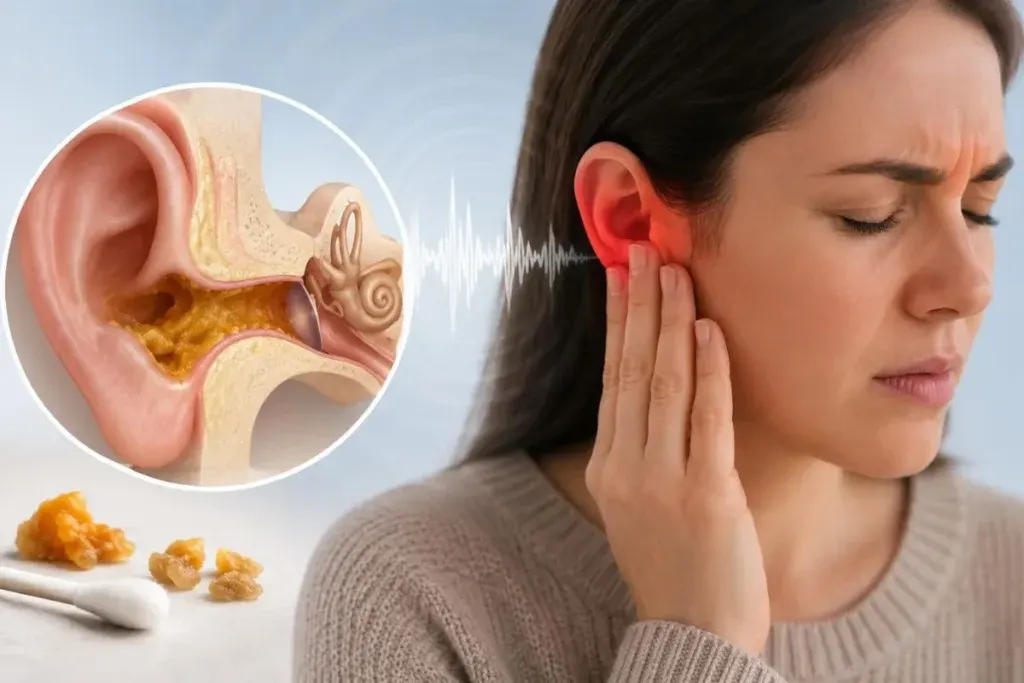
To understand earwax and tinnitus, you must recognize how a physical blockage alters your hearing. When excess wax impacts the ear canal, it presses against the eardrum and cuts off external sounds. This blockage forces the brain to amplify its internal volume, creating a persistent ringing or buzzing sensation.
The sensation of a clogged ear combined with constant noise can be incredibly distracting. It makes it hard to focus on your work or sleep peacefully at night. Many people mistakenly use cotton swabs to clear the canal, but this dangerous habit only pushes the blockage deeper.
This guide explores why this buildup happens, how it interferes with your hearing, and the safest professional methods for removal. By identifying the connection between wax and sound, you can take the right steps toward permanent relief and long-term ear health.
Key Takeaways
Earwax ($cerumen$) is a completely healthy substance your body naturally creates to trap dust, filter out dirt, and keep your ear canal clean. Tinnitus is the medical term for hearing an internal sound, like ringing, buzzing, or clicking, which does not come from your environment.
When earwax completely blocks the ear canal, it forms a dense, physical wall that stops normal sound waves from getting inside. Because your brain suddenly experiences an artificial, muffled silence, it tries to fix the problem. The auditory cortex turns up its own internal volume similar to turning up the static on a car radio when you lose a signal. This internal amplification is exactly what causes you to hear that constant, phantom ringing.
Furthermore, hardened wax can press directly against your delicate eardrum ($tympanic\ membrane$). When the eardrum is pinned down by an ear blockage, it cannot vibrate properly. This mechanical pressure sends distorted, false sound signals straight to your brain, triggering or worsening the buzzing sound.
Under normal conditions, old earwax gradually migrates out of the ear canal naturally through normal jaw movements like chewing, talking, or yawning. However, this self-cleaning mechanism can break down, leading to impacted earwax.
You are significantly more likely to experience an ear blockage and subsequent earwax hearing loss if you:
It can be hard to know if your ringing is from a simple blockage or a deeper issue. Earwax is likely contributing to your tinnitus if you experience these symptoms:
You may be more likely to experience tinnitus from earwax buildup if you:
Identifying these risk factors early can help prevent future hearing problems and sudden tinnitus symptoms.
When your ear feels clogged, it is tempting to try quick home remedies. Avoid these dangerous mistakes to keep your hearing safe:
Protecting your hearing requires a gentle approach. You should never stick anything smaller than your elbow into your ear canal.
If you have no history of ear surgeries, a torn eardrum, or active ear pain, you can use mild drops to soften the wax:
For a complete or hardened blockage, it is best to avoid home remedies. Instead, visit a professional hearing test center in Delhi for a safe extraction:
Although excess earwax can trigger tinnitus, it is not the only cause. If ringing continues after the physical ear blockage is completely removed, other factors deeper in your auditory system may be responsible, including:
While earwax-related tinnitus often improves after the blockage is removed, persistent ringing should never be ignored. Schedule a hearing evaluation if:
A comprehensive hearing assessment can determine whether earwax is the cause or if an underlying hearing or ear condition requires further treatment.
Although excess earwax can trigger tinnitus, it is not the only possible cause. If ringing continues after the blockage is removed, other factors may be responsible, including:
If symptoms continue after earwax removal, visiting a hearing test clinic for a complete assessment can help identify whether hearing loss, inner-ear damage, or another condition is contributing to the ringing.
If you have had your ears professionally cleaned but the ringing sound continues, the issue might be located deeper in your auditory system. Getting a professional audiometry test in Delhi is the most reliable step to understand the true health of your ears.
What an Audiometry Test Tracks | How It Helps You Find Relief |
Pinpoints the Root Cause | Measures exactly how well you hear different pitches and volumes to see if your tinnitus is connected to natural aging or inner-ear nerve changes. |
Maps Your Tinnitus Profile | Tracks the exact pitch and volume of your internal ringing so your care team can build personalized sound therapies. |
Fits Helpful Technology | Provides the precise prescription data needed to program modern hearing devices that can quiet phantom background noises. |
Protects Long-Term Hearing | Catches minor sensory changes early, preventing listening fatigue and mental strain. |
Use this simple routine to protect your ears from future blockages:
Accurately identifying the cause of your ringing in the ears is the most critical step toward finding relief and safeguarding your long-term cognitive wellness. Whether your symptoms are driven by a temporary physical ear blockage or a bigger sensory change, early intervention stops your brain from straining to process missing sounds.
Prioritizing a professional check-up ensures that any treatment path or advanced digital technology matches your exact acoustic needs, removing daily listening fatigue so you can remain fully active and connected to your world.
Stop dealing with that annoying internal buzzing and that clogged feeling every single day. Visit our professional hearing test center in Delhi to safely clear the buildup and get instant relief.

The editorial team at Hearing Hope intends to share expert-certified information on hearing loss, hearing tests, and hearing care solutions. We aim to ease your journey and provide you with reliable information and aid.
Get In Touch
If impacted earwax is the underlying cause, tinnitus may improve or disappear after the blockage is removed. However, tinnitus caused by hearing loss, noise exposure, or other medical conditions may continue even after earwax removal.
Yes. When earwax creates a complete physical barrier across the canal, it causes conductive hearing loss. Sound waves cannot physically reach your eardrum, making conversational speech and background sounds seem heavily muffled, distant, or quiet. This temporary loss resolves once the blockage is safely removed.
Water causes dry earwax to expand rapidly like a sponge inside your canal. This sudden volume increase creates intense pressure against the eardrum and completes a total acoustic blockage, cutting off outside environmental sounds and forcing your brain to amplify its internal ringing.
Yes, a localized wax blockage can trigger ringing or buzzing exclusively on that side.
Most people do not need regular ear cleanings because the ears naturally clear themselves out over time. The ear canal features a built-in, natural self-cleaning mechanism.
You should schedule a proper hearing evaluation with a specialist to check for other factors. Persistent ringing often indicates sensorineural hearing issues or internal nerve adjustments.